
TIG tungsten grinder vs bench grinder: which should you choose?
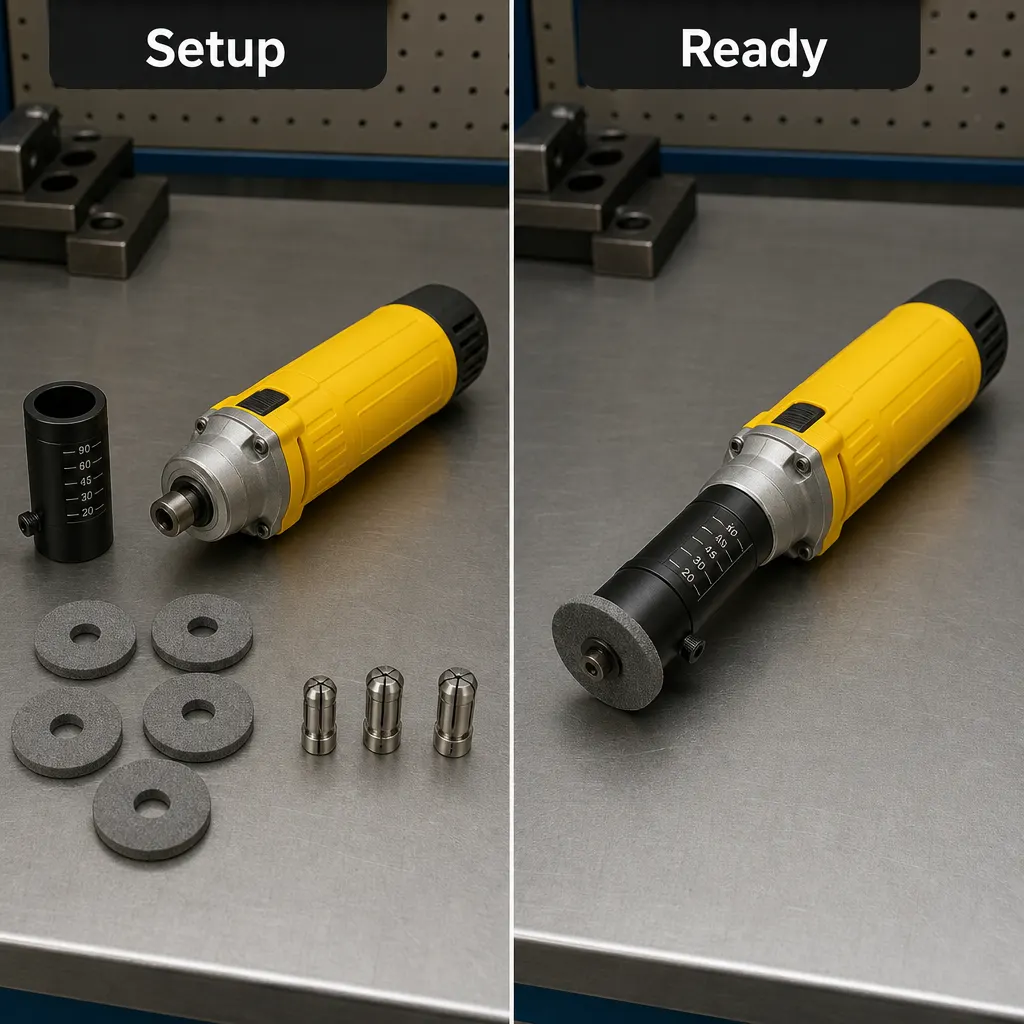
Choose a dedicated TIG tungsten grinder if keeping electrode preparation beside your welding position matters more than having a general-purpose machine. Choose a bench grinder if you already have a suitable, controlled routine and do not mind walking to a shared grinding station. The Compact TIG Tungsten Electrode Grinder in this product is a 7 × 5.5 × 5.5 cm preparation tool, but several technical details remain unspecified.
That distinction matters when a tungsten becomes dipped or contaminated during a repair on a vehicle, frame, pipe or railing. A shared grinder may be perfectly serviceable for a small workshop, yet it can interrupt an awkward job or mix electrode preparation with general metalwork. A compact dedicated unit gives you a separate place for that task. It should be considered a convenience and workflow choice, rather than a listed on the product page route to better arcs, cleaner welds or production-level repeatability.
When does a dedicated grinder help at a UK welding bench?
At a small garage or repair bench, the strongest case for a dedicated grinder is proximity. If your TIG set is at one end of the workshop and the bench grinder is shared near the door, every dipped tungsten means stopping, removing yourself from the job and returning to the weld. That interruption becomes more noticeable when you are fitting parts, working around a vehicle or preparing several electrodes before an awkward position.
The product’s stated dimensions are 7 × 5.5 × 5.5 cm, so it is aimed at a compact work area rather than a full-size general metalworking station. That may suit a home garage, mobile repair setup or crowded fabrication bench where another large machine would be unwelcome. The size alone does not establish portability, battery operation, durability or suitability for heavy work, so treat it as a small preparation tool that can be placed close to the TIG area.
What does the listing actually tell you about this compact TIG grinder?
The product is identified as a Compact TIG Tungsten Electrode Grinder, and the stated purpose is preparing tungsten electrodes used in TIG welding. The stated size is 7 × 5.5 × 5.5 cm. The listing also describes the compact format as suitable for keeping electrode preparation close to the work area. Those are the useful anchors for this comparison: product category, intended task and physical dimensions.
The listing does not state the model, power source, plug type, abrasive material, supported electrode diameters, grinding angle, replacement consumables, dust-management arrangement or included accessories. It also does not state a capacity, duty cycle or production rating. Do not fill those gaps with assumptions based on other tungsten grinders. If any of those points controls your choice, ask the seller before ordering and compare the answer with the requirements of your own TIG routine.
Which checks should you make before buying?
Start with the physical setting. Measure the space beside your TIG welder, torch stand or electrode container and allow room to work safely around the tool. The listed size is 7 × 5.5 × 5.5 cm, but the listing does not provide operating clearances, mounting information or a recommended bench arrangement. A compact body can fit a shelf while still needing more room when an electrode is being prepared.
Then check the parts of the setup that are absent from the product information. Confirm the power and plug arrangement, the electrode sizes it accepts, the abrasive or wheel specification, the available angle adjustment, replacement-part arrangements and what arrives in the package. Also ask how dust and used abrasive are managed in your intended workshop. These are purchase checks, not details to infer from the word “TIG” in the title.
A side-by-side choice for the home garage or workshop
For a compact dedicated grinder, check that the stated 7 × 5.5 × 5.5 cm size fits beside the TIG station; confirm that your intended electrode sizes are supported; verify the plug and power arrangement; establish which abrasive and accessories are included; and decide where dust or debris will be handled. The confirmed purpose is TIG tungsten electrode preparation. Angle control, compatibility, consumables and performance are not stated in the listing.
For a bench grinder, check which wheel and working area you would reserve, whether it is shared with other metals, how far it is from the welding position, and whether your existing process gives you the control you require. Compare the time and space consequences rather than assuming one option automatically produces a better electrode. If you weld occasionally, the existing machine may be adequate for your routine. If repeated preparation interrupts repair work, a separate compact location may be worth considering.
Who should avoid choosing the compact listing?
I’d skip this product for a high-volume production cell, critical welding process or established fabrication operation that needs confirmed capacity, abrasive specifications, electrode compatibility, angle control and repeatability. None of those performance or industrial-use details is stated. A small body also does not prove that it will withstand continuous work, accept every electrode size or meet a particular shop procedure.
It may also be the wrong choice if your main requirement is a general-purpose grinder for steelwork, deburring or tool sharpening. The stated job is tungsten electrode preparation, and the compact format is presented around keeping that job close to the work area. If you need a known plug, a particular wheel material, fixed geometry, dust extraction or named accessories, pause the purchase until those points are answered rather than relying on an attractive product title.
Do you need one for occasional TIG welding?
No, a dedicated grinder is not automatically essential for every home welder. If you practise occasionally, have an existing bench grinder and can maintain a suitable electrode-preparation routine, buying another tool may offer little beyond convenience. That is especially true in a small shed where each extra item competes for bench space. The decision depends on how often preparation interrupts you and how much value you place on keeping the TIG area self-contained.
The case becomes stronger when you repeatedly dip tungsten during learning, prepare several electrodes before a job or work away from the main grinding station. In those situations, a separate tool can make the sequence easier to organise. The Compact TIG Tungsten Electrode Grinder is explicitly positioned for this preparation task and measures 7 × 5.5 × 5.5 cm. It should still be judged on the missing compatibility and setup information before you decide that its convenience justifies the purchase.
What is the sensible next step before ordering?
Write down your actual routine: where you weld, how often an electrode needs attention, how far the existing grinder is from the job and whether a dedicated bench-side spot would solve a real interruption. Measure the proposed location, then ask the seller for the missing power, plug, abrasive, electrode-size, angle, accessory and consumable information. Keep those answers with your workshop notes so you can compare this unit fairly with the equipment you already own.
If the answers match your setup and your priority is a compact TIG preparation point, the 7 × 5.5 × 5.5 cm listing is the relevant size variant to assess. If your priority is general grinding, continuous production or tightly specified electrode geometry, keep looking for equipment with those requirements stated clearly. The useful choice is the one that fits your actual welding bench, not the one that makes the broadest promise.