
How do you sharpen a contaminated tungsten electrode?
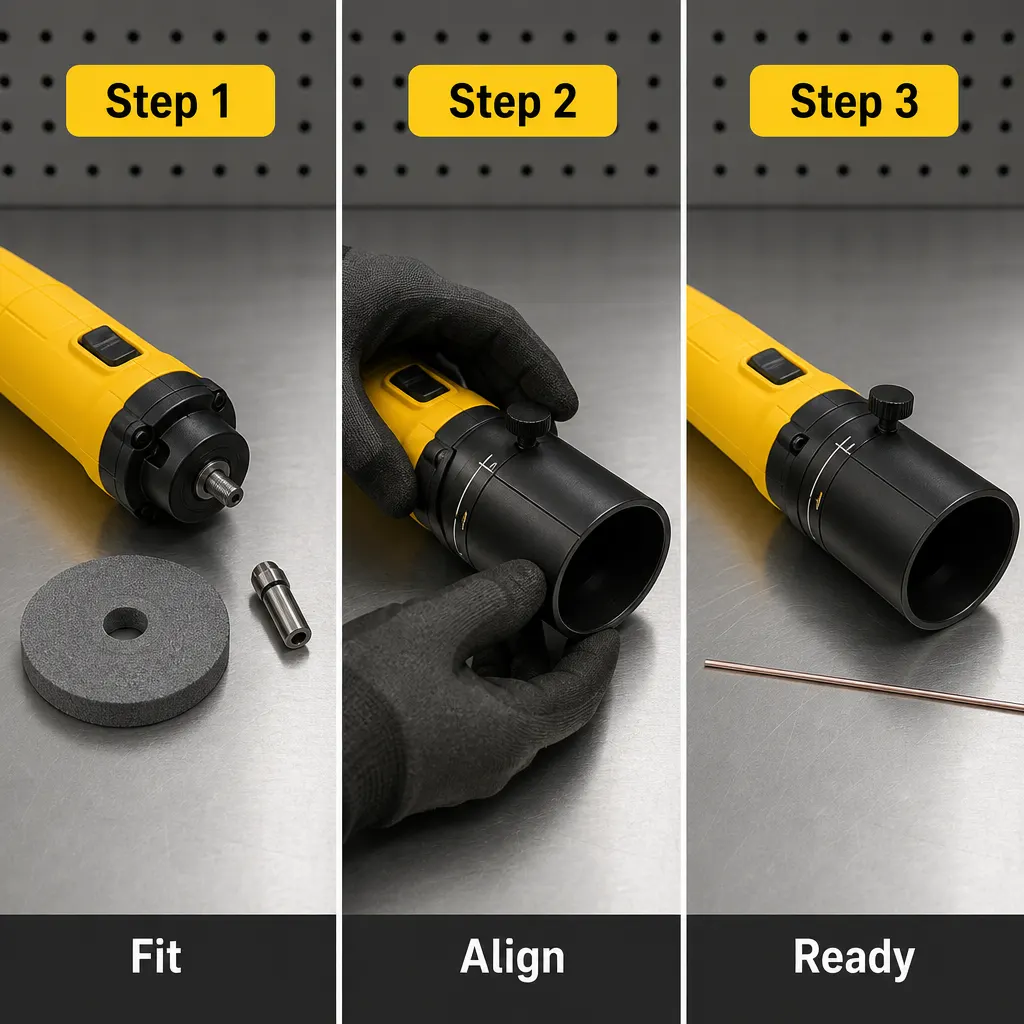
To sharpen a contaminated tungsten electrode, stop welding, remove the electrode from the torch, clean away visible contamination and grind the damaged end on equipment intended for tungsten preparation. Remove enough material to reach clean tungsten, then inspect the point before refitting it. The Compact TIG Tungsten Electrode Grinder, 7 × 5.5 × 5.5 cm is presented for TIG electrode preparation, so it may suit a small bench-side setup where you want a dedicated place for this job.
A dipped tungsten can interrupt a repair at a vehicle, frame, pipe or fabrication bench, particularly when the nearest grinder is shared with general metalwork. The immediate choice is whether to restore the electrode at your current work position or walk to an existing grinder. You still need to follow the procedure for your tungsten type, welding current and joint, because this product does not state its abrasive, power arrangement, electrode-size range, angle control or included accessories. For wider TIG preparation guidance, see the tungsten electrode preparation guide.
Where does this job happen in a UK workshop?
In a small UK garage or repair workshop, the problem often appears halfway through a job rather than during a planned setup. You may be welding a bracket beside a vehicle, repairing a railing outside the main bench, fitting a stainless component or practising on scrap when the tungsten touches the weld pool. A full-size shared grinder may be several steps away, covered in general workshop dust or already being used. Keeping a compact preparation tool near the TIG area can make the next action easier to organise.
The product is described as a compact TIG tungsten electrode grinder measuring 7 × 5.5 × 5.5 cm. That size is relevant if your bench, welding trolley or garage shelf is short on room. It does not establish that the grinder is portable, battery-powered, suitable for outdoor work or designed for production volumes. If you weld occasionally, the main question is whether having a separate preparation point saves enough interruption to justify another tool. If you prepare electrodes continuously, you need to ask for the missing specifications before treating the compact format as suitable.
What should you check before grinding the electrode?
Start with the electrode itself. Remove it from the torch and look for a visibly contaminated, flattened or damaged end. Separate contaminated material from clean electrodes so you do not lose track of what needs attention. Clean the electrode in the way your welding procedure calls for, then use a tungsten preparation method that matches the electrode and work. Do not assume that any abrasive wheel, angle or accessory will suit every TIG setup; the product page does not state those details for this variant.
Next, check the work area. You need a stable place for preparation, room to handle the electrode safely and a method of managing dust or swarf appropriate to your workshop. Keep the preparation task separate from food areas, clean assembly surfaces and unrelated grinding where possible. The listing confirms the product category and dimensions, but it does not confirm dust extraction, guards, consumables, wheel material, replacement parts or protective equipment. Those omissions matter more if you are setting up a permanent station rather than looking for occasional bench-side convenience.
Which product details are confirmed, and which remain unknown?
The confirmed description is narrow: this is a Compact TIG Tungsten Electrode Grinder intended for preparing tungsten electrodes used in TIG welding, with a stated size of 7 × 5.5 × 5.5 cm. That makes it easy to identify the category and the physical variant. The product is listed within TIG welding equipment, rather than as a general bench grinder. You can review the TIG tungsten electrode grinder listing alongside your bench layout and decide whether the stated dimensions make sense for the space available.
Several buying questions cannot be answered from the available product information. There is no stated model number, plug type, voltage, motor specification, abrasive type, electrode diameter range, grinding angle, adjustment system, duty cycle, dust-control arrangement or accessory list. There is also no product-specific evidence for improved arc stability, repeatability, weld appearance, durability or high-volume suitability. Treat each of those as an open question. A careful buyer should contact the shop before purchase if any one of them is essential to the welding routine.
When should you keep using a bench grinder instead?
A dedicated compact grinder may be unnecessary if you already have a suitable tungsten preparation arrangement beside the welding bench, especially for occasional garage work. A reserved wheel or established method may be simpler than adding another item, provided it fits your workshop procedure and keeps the electrode preparation clean and controlled. You may also prefer an existing tool when you need a known power supply, a particular abrasive or a clearly specified adjustment range that this product does not provide.
I would skip this purchase if you need a verified industrial production system, exact supported electrode diameters, a specified grinding angle, known consumable availability or confirmed electrical compatibility before ordering. The compact dimensions alone cannot answer those requirements. It may also be a poor match for heavily fouled electrodes if your process requires substantial material removal and the product information does not state its capacity. For critical or tightly controlled fabrication, obtain the missing technical information and compare it with your established preparation equipment.
Can a compact grinder fit a sensible preparation sequence?
A straightforward sequence can help you decide whether this type of tool belongs at your TIG bench. First, pause the weld and remove the electrode. Second, identify the contaminated section and clean the electrode as your welding process requires. Third, grind away the affected end using equipment and technique appropriate to that electrode. Fourth, inspect the result before returning it to the torch. Finally, check the arc and workpiece in the normal way for your procedure, stopping again if contamination or damage reappears.
Use the following checks before buying the Compact TIG Tungsten Electrode Grinder, 7 × 5.5 × 5.5 cm. Confirm that 7 × 5.5 × 5.5 cm fits the intended bench, trolley or shelf. Confirm that the product is for TIG tungsten preparation, rather than a general metal grinder. Ask about power, plug, abrasive, supported electrode sizes, angle control, accessories, dust management and replacement parts because these are not stated. Decide whether you need occasional touch-ups, a dedicated preparation location or a higher-capacity workshop system. Keep each answer tied to your actual welding position and workload.
What is the right next step for your garage or fabrication bench?
If your main frustration is leaving a TIG job whenever a tungsten becomes contaminated, measure the space beside the welding area and compare it with the stated 7 × 5.5 × 5.5 cm size. Then list the technical details your routine depends on, such as electrode dimensions, power supply, abrasive and grinding control. If those requirements are flexible and you mainly want a compact preparation location, this product may be worth considering. If they are essential, ask for answers before placing the order rather than filling the gaps with assumptions.
For a learner in a home garage, the sensible next step is to decide whether the convenience will be used often enough to matter. For a mobile repair fabricator, consider whether the tool can be positioned where the TIG work actually happens, while remembering that the listing confirms compact dimensions rather than portability features. For a precision-focused workshop, keep the product within its stated boundary: a compact TIG tungsten electrode preparation tool. That gives you a fair comparison with your current grinder without promising a welding result the product information does not establish.