
How to sharpen tungsten electrodes for TIG welding at a UK workbench
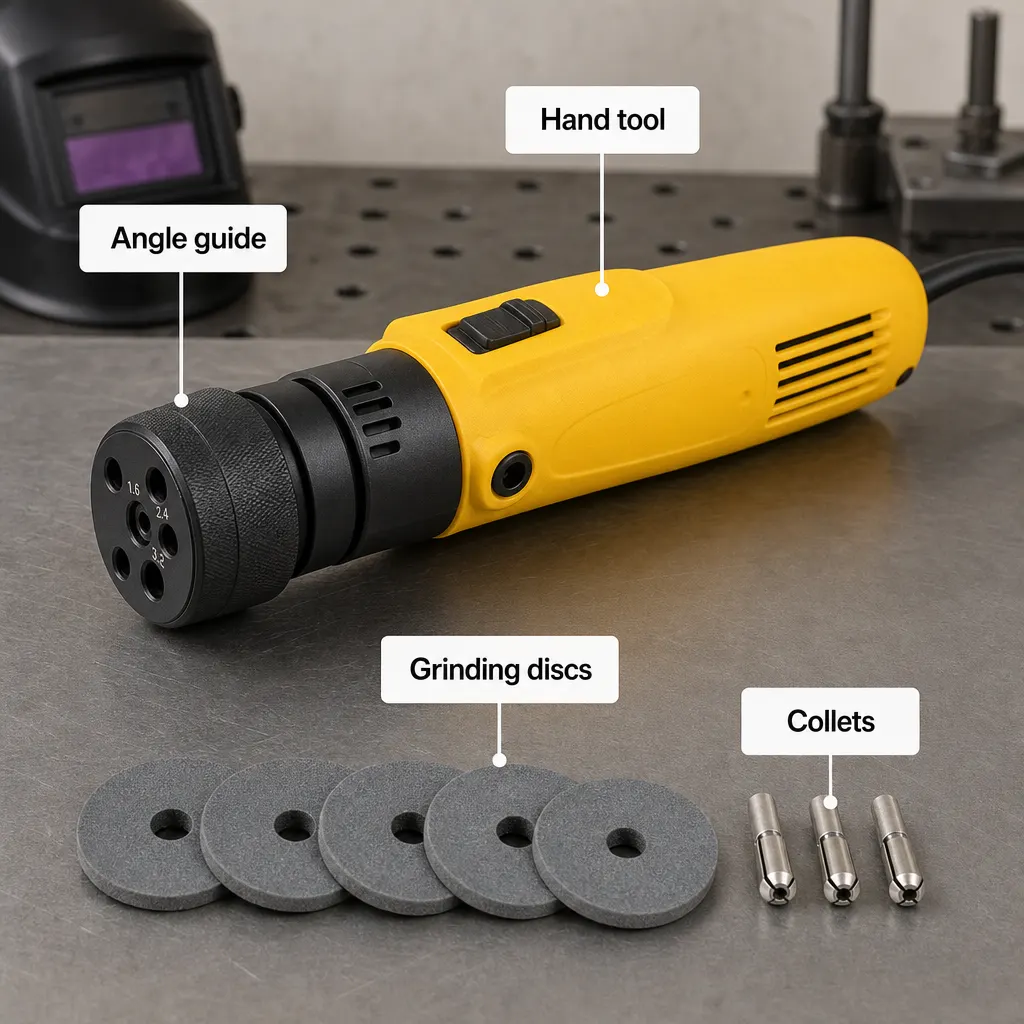
To sharpen tungsten electrodes for TIG welding, remove the contaminated end with a suitable grinding method, form the point in line with the electrode, and keep the prepared tungsten separate from general workshop grinding. A dedicated tool can make that preparation easier to keep close to the welding position. The Compact TIG Tungsten Electrode Grinder is presented for this preparation job and measures 7 × 5.5 × 5.5 cm.
That short answer matters when you are working at a vehicle, railing, pipe or small fabrication bench and a dipped tungsten would otherwise send you across the workshop. The buyer is usually trying to restore an electrode without breaking concentration, rather than looking for a general-purpose metal grinder. The decision is therefore about workflow and suitability: whether a compact, dedicated preparation location is useful for your TIG work, and whether the limited product information answers the questions you need to resolve first.
Begin with the electrode itself. If the tip has touched the weld pool or filler material, do not treat a quick wipe as a substitute for proper preparation. Remove the affected section using a method appropriate to your workshop, then prepare a clean point before restarting. The grinder listing confirms the product category and size, but it does not state the abrasive, supported electrode diameters, power arrangement, angle control or included accessories.
What does tungsten preparation involve at a garage TIG station?
At a home garage or shed, tungsten preparation is usually a small task repeated between practice welds, repairs and fit-up changes. Hold the electrode securely, remove the contaminated portion, and create a controlled point rather than allowing the end to become rounded or irregular. The exact point shape and length depend on your welding method, electrode choice and job requirements, so avoid assuming that one setting suits every stainless, mild-steel or aluminium task.
A clean work area helps prevent the electrode picking up material from unrelated grinding. If you use a shared bench grinder, a wheel that has already been used for other metals may create a separation problem for someone trying to keep tungsten preparation consistent. A dedicated location beside the TIG set-up can make the handover from welding to preparation more straightforward, particularly when the work is on a vehicle or frame and the main workshop grinder is several metres away.
For a learner, the useful question is whether another tool will make the routine easier to understand and repeat. You do not need to treat a dedicated grinder as essential equipment for every occasional TIG user. If you weld once a month and already have a suitable preparation method, the compact unit may offer convenience rather than a necessary capability. If repeated dips interrupt practice at a crowded garage bench, keeping the preparation task close at hand may carry more value.
Which product details should you check before buying?
The Compact TIG Tungsten Electrode Grinder is described as a tool for preparing tungsten electrodes used in TIG welding. Its stated size is 7 × 5.5 × 5.5 cm, which gives you a clear starting point for deciding whether it can occupy a corner of a small welding bench. The listing does not provide a model number, so retain the full product name and dimensions when checking that you have selected the intended variant.
Several practical details remain unanswered. The available product information does not state the plug or power supply, abrasive or wheel material, electrode diameter range, preparation angle, replacement consumables, dust-management arrangement or kit contents. It also does not say whether the grinder is intended for a particular tungsten type. Those are buying questions, not gaps to fill with assumptions. Ask the seller before purchase if any of them determine whether the tool can be used in your workshop.
Use the dimensions as a placement check rather than as evidence of capability. Measure the clear space beside your TIG machine, allow room to handle an electrode safely, and consider where dust or removed tungsten material would go. Compact size may suit a repair bench, mobile work position or small garage, but the size alone does not establish durability, grinding speed, repeatability or suitability for production welding.
When is this compact TIG grinder the wrong match?
Skip this type of purchase if you need a fully specified production grinding system and the available information does not confirm the features your process requires. There is no stated electrode-size range, adjustment system, abrasive specification, power detail, dust extraction provision or accessory list for this product. A precision-conscious user working on repeatable stainless, automotive or model-engineering jobs may need those answers before considering a compact unit.
It may also be a poor match for heavily fouled electrodes if you have not confirmed how much material the grinder is designed to remove. A small preparation tool should not automatically be treated as a replacement for every general workshop grinding task. Nor should it be assumed suitable for a shared commercial environment simply because it occupies little bench space. Volume, operator training, maintenance arrangements and local workshop controls still matter.
The product is easier to assess when you keep its boundary clear: a compact item described for TIG tungsten electrode preparation. The listing does not support claims about fixed angles, electrode compatibility, industrial output, long-term durability or improved arc behaviour. If those outcomes are central to your work, request precise information or choose equipment whose published specifications match the process before committing.
What should you check at the bench before choosing a preparation method?
Use this sequence at your garage bench or fabrication station. First, identify why the tungsten needs attention: a dipped tip, visible contamination or a worn point. Second, decide whether the whole contaminated section must be removed rather than trying to disguise it. Third, choose a preparation method that keeps the tungsten and grinding surface appropriate for the job. Fourth, make sure the point you create matches the technique you intend to use. Finally, inspect the electrode before placing it back in the torch.
Then compare the tool with your actual space. Measure the available area against 7 × 5.5 × 5.5 cm, check that you can reach it without leaning across hot work, and decide where the prepared and used electrodes will be kept. Confirm the product name, dimensions, power arrangement, abrasive, supported diameters, angle method and included items with the seller where those details affect your choice. Treat any answer that is not supplied as unresolved rather than guessing.
For a mobile repair welder, add a workflow check: will the tool stay near the vehicle, railing or frame, or will it live in a separate workshop? For a home learner, ask whether repeated electrode dips justify another purchase. For a small fabrication team, agree who will maintain the preparation area and how the grinding surface will be kept separate. These questions reveal whether the unit solves a real interruption or simply adds another item to the bench.
How should you handle a contaminated tungsten after welding?
If the tungsten has dipped into the weld pool, stop and inspect it before continuing. A contaminated end can make the next start harder to judge and can interfere with the clean preparation routine you are trying to establish. Allow hot equipment to be handled safely, remove the affected section using your chosen method, and prepare the replacement point before returning to the work. Keep your attention on the electrode rather than trying to continue with a visibly damaged tip.
The grinder listing provides no product-specific procedure for removing contamination, no stated grinding angle and no claim about how much material it can remove. That means general TIG technique should not be presented as a guarantee of what this particular unit will do. Follow the instructions supplied with the product if you buy it, and use the workshop controls appropriate to grinding, sparks, dust, hot metal and electrical equipment.
A dedicated preparation spot can still be useful in this moment. When you are repairing a bracket or working around a vehicle, walking to a remote machine can interrupt the sequence of checking the torch, replacing the electrode and resuming the weld. The value here is organisation and proximity. It is not proof that the grinder will prevent contamination, cure arc problems or deliver a particular weld result.
Is the 7 × 5.5 × 5.5 cm grinder worth considering for your UK workshop?
Consider it if your main problem is the location of electrode preparation rather than a lack of general grinding capacity. The Compact TIG Tungsten Electrode Grinder is explicitly positioned for TIG tungsten preparation and has a stated 7 × 5.5 × 5.5 cm size. That combination may suit a small garage, repair bench or close-to-work-area arrangement where every tool needs to earn its space. It remains a compact preparation option, not a verified answer to every TIG grinding requirement.
Before ordering, write down the facts that matter for your set-up: where it will sit, which electrode sizes you use, how you expect the point to be formed, what power connection is available, and whether you need replacement abrasive or other accessories. The supplied information answers the product category and dimensions, while the other points are not stated. If any is essential, contact the shop and obtain a clear answer rather than relying on photographs or assumptions.
If the answers fit your occasional garage practice or bench-side repair routine, the product can be considered on that limited basis. If you need published industrial specifications, known consumables, confirmed compatibility or a production workflow, pause and compare against equipment that supplies those details. The sensible next step is to measure your bench, list your required features, and ask about the missing specifications before making the purchase.