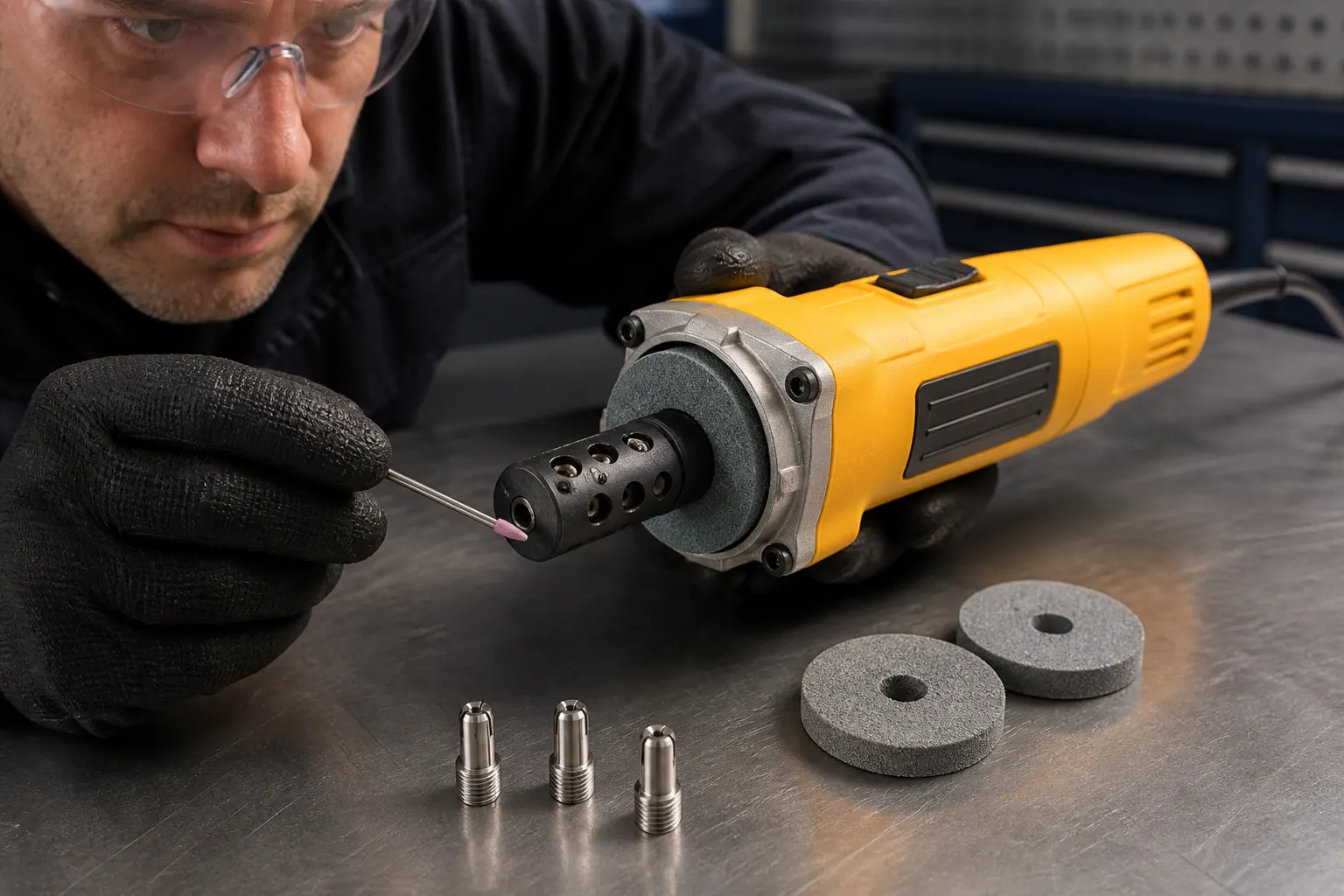
The bench-side answer when the tungsten has been dipped
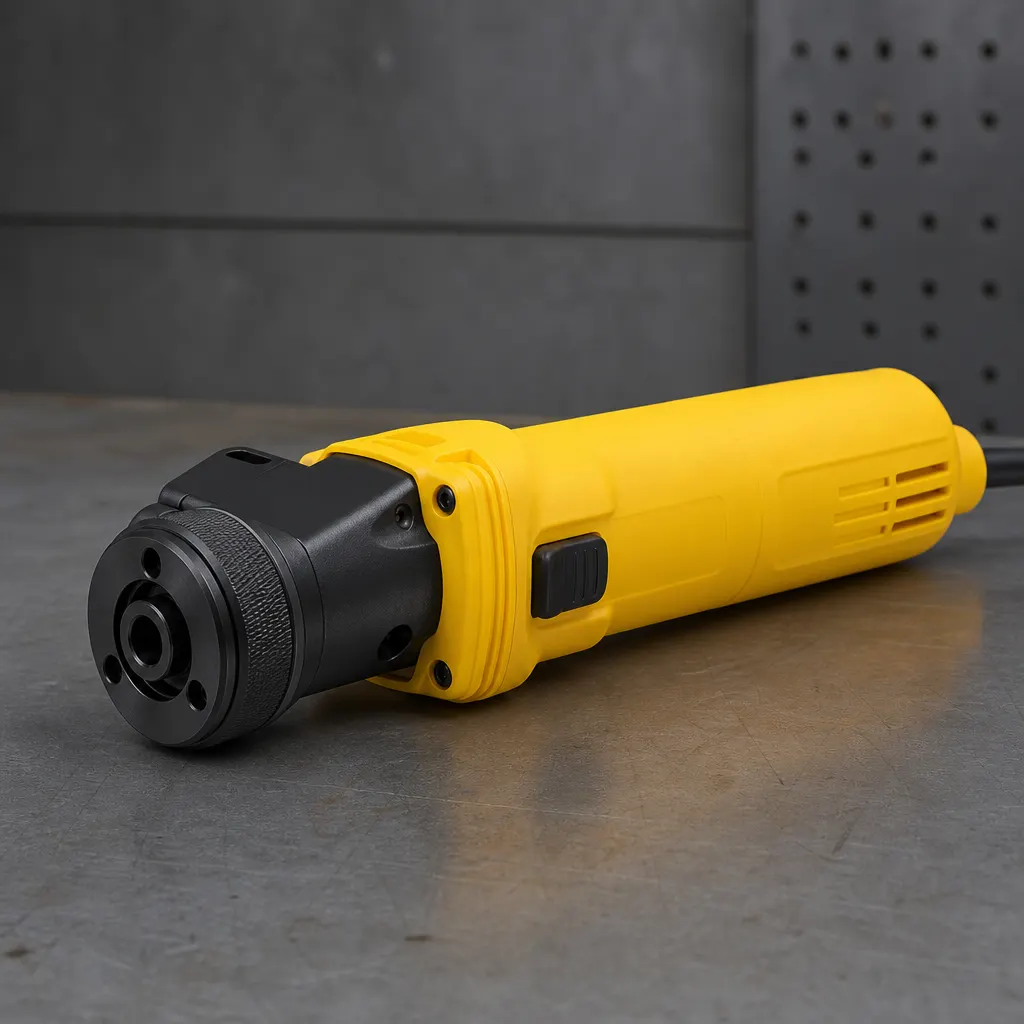
If you are searching for a TIG tungsten grinder near welding bench, the practical answer is simple: choose one only if the main problem is repeated tungsten preparation close to the work, not if you need a full general-purpose grinder. A compact TIG tungsten electrode grinder is meant for preparing tungsten electrodes used in TIG welding, and the documented version here is the selected 7 × 5.5 × 5.5 cm size.
That makes the decision less about chasing a dramatic performance claim and more about workflow. On a fabrication bench in Birmingham, for example, the interruption is familiar: touch the puddle, contaminate the tungsten, stop, leave the torch, walk to another machine, reshape the point, then return and try to find the same rhythm again. A small dedicated preparation tool near the bench can reduce that movement, provided its limits are understood before buying.
The UK workshop job this tool is trying to solve
In a small welding bay, home garage or repair workshop, tungsten preparation is not a one-off setup task. Learners dip the tungsten while practising beads. Repair fabricators lose the point when access is awkward around a frame, pipe or railing. Precision users may want to keep tungsten preparation away from shared wheels used for general metal grinding. The shared job is not glamorous: restore a usable point and get back to the weld without turning the bench into a larger equipment zone.
The documented product facts support that kind of close-at-hand role. The product is described as a compact tungsten electrode grinder for TIG welding preparation, locked to the listed variant labelled 7 × 5.5 × 5.5 cm. That small footprint is the important fact for a crowded bench. It should be considered as a dedicated preparation station for tungsten electrodes, not as a TIG welder, not as an angle grinder and not as a broad replacement for every grinding task in the shop.
The facts to check before giving it bench space
Start with the facts that are actually documented. The product title is Compact TIG Tungsten Electrode Grinder, 7 × 5.5 × 5.5 cm. The listed purpose is preparing tungsten electrodes used in TIG welding. The selected variant is explicitly the 7 × 5.5 × 5.5 cm size. The listing also keeps the size configuration explicit and excludes unverified plug, accessory and performance claims. Those exclusions matter because they stop the product from being judged on promises it has not made.
A buyer should therefore check the bench problem against those facts. If the priority is a compact tool for tungsten electrode tip preparation near a work area, the listing aligns with that need. If the priority is confirmed plug details, included accessories, wheel material, angle control, tungsten diameter range, certification or measured weld outcomes, those details are not documented in the supplied facts. Treat unknowns as unknowns, especially when the job involves professional repeatability or critical weld appearance.
Where a compact grinder fits on a packing bench or welding bench
The useful setting is a real work surface, not a showroom bench. Picture a small TIG area in a Leeds motorsport workshop: torch lead, filler rods, clamps, a few prepared electrodes, gloves, job sheet and a part that cannot easily be moved. A compact 7 × 5.5 × 5.5 cm unit has an obvious attraction here because it does not ask for the same bench space as larger workshop equipment. It can be considered as part of a tidy tungsten-prep corner close to the welding position.
That closeness is most valuable when the interruption itself is the cost. Walking away from the bench is not only about distance; it breaks concentration and makes small repeated mistakes more irritating. For a learner in a home garage, it may also stop tungsten sharpening from becoming a reason to avoid practice. For a fabricator, it can make the bench routine cleaner: contaminate the point, stop safely, prepare the tungsten, return to the joint, and avoid mixing the task with general grinding work.
The mismatches that should stop a poor buy
Do not buy this kind of compact grinder if you are expecting documented industrial capacity, a verified abrasive specification or confirmed accessory bundle from the supplied facts. Those details are not present. The listing does not verify plug type, accessories, wheel material, performance, safety certification or compatibility across every tungsten size. A careful buyer should not fill those gaps with assumptions just because the product category sounds familiar.
It may also be the wrong choice if your current process is already controlled and close by. If you have a dedicated tungsten-only wheel at the bench and it works well for your volume of TIG work, a compact extra unit may be convenience rather than necessity. For heavy production, badly fouled electrodes or work where documented equipment standards are required, the sensible route is to ask for the missing facts or choose equipment with the level of specification your job requires.
A bench-side checklist before you choose
Use this checklist as a practical object while looking at your own bench. Size: can a 7 × 5.5 × 5.5 cm tungsten-prep tool sit near the TIG area without crowding the torch lead, filler rods or clamps? Surface: is there a stable place where electrode preparation can happen without mixing with general grinding dust or offcuts? Setup: are you comfortable buying when plug details, accessories and wheel material are not verified in the supplied product facts?
Content: does the page clearly say it is for tungsten electrode preparation, rather than implying it is a welder, a bench grinder or a universal sharpening machine? Environment: will close placement genuinely save movement during a bench, frame, pipe, railing or repair job? Aftercare: can you keep the preparation area dedicated to tungsten work and avoid turning it into another shared grinding spot? If several answers are no, the product may not solve your real bottleneck.
How to compare it with the grinder you already use
A shared bench grinder or sanding belt may already be available, which is why the comparison should be honest. The compact TIG tungsten electrode grinder is documented as a tungsten-preparation tool in a small 7 × 5.5 × 5.5 cm format. Its appeal is separation and placement: it can be considered for keeping tungsten prep close to the welding area. A general grinder’s appeal is that it is already there, familiar and broader in use.
The comparison turns on behaviour. If the shared grinder is across the workshop, used for general steel work and awkward to access mid-job, a compact dedicated option may make the TIG routine feel less scattered. If the shared grinder is already dedicated, clean, nearby and understood by the person welding, the compact tool has less to prove. Do not let the product category make the decision for you; let the actual movement, bench space and contamination concerns decide.
The grounded next step for a UK buyer
Before buying, map one recent TIG job from your own bench. Count how often the tungsten needed attention, where you walked, what else was on the work surface and whether the interruption affected the job. Then compare that routine with the documented facts: compact TIG tungsten electrode grinder, 7 × 5.5 × 5.5 cm, designed for preparing tungsten electrodes used in TIG welding, with unverified plug, accessory and performance claims excluded.
If the match is mainly about convenience, be honest about that. Convenience can still be a valid reason when it reduces repeated bench disruption, especially for learners, small workshops and repair work where the part is awkward to move. If the match depends on an undocumented feature, pause and ask for that detail before treating the product as suitable. The best purchase here is not the most dramatic claim; it is the tool whose verified facts match the way your bench actually works.